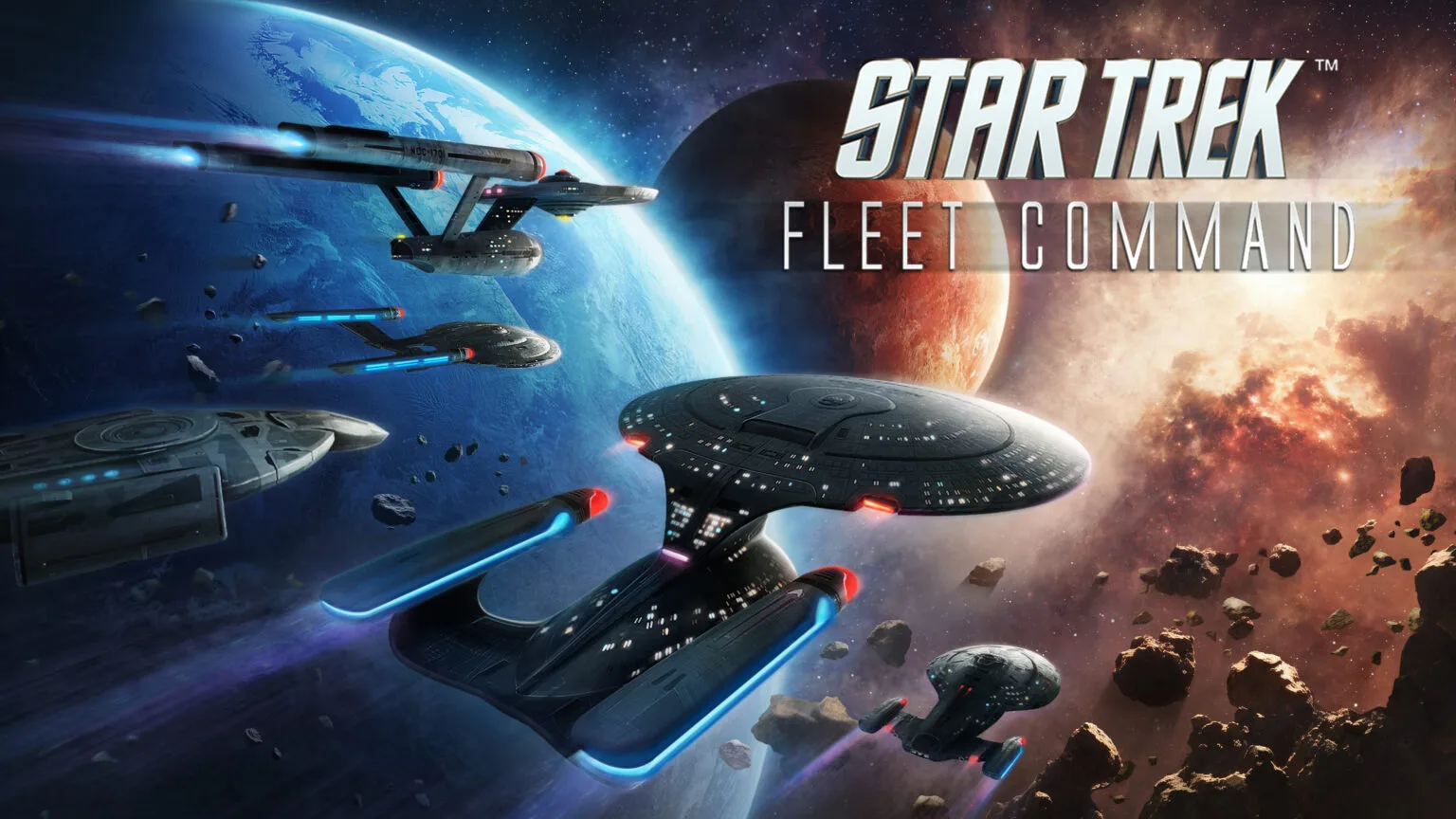
Star Trek Fleet Command review — build the fleet you always wanted to command
Famous ships, specialist crews and alliance operations turn a persistent galaxy into a rewarding long-term command career.
Recommended
Recommended for Star Trek fans who enjoy fleet planning, recognizable captains and the steady satisfaction of turning each Operations milestone into a new capability.
Pros
- Iconic ships and officers give long progression goals a strong Star Trek identity
- Specialty ships open distinct activities instead of serving as simple stat replacements
- Alliances connect Help, armadas, events and shared planning into meaningful group play
Cons
- The number of currencies and progression trees takes time to learn
- Timers and station protection reward regular account planning
- Competitive event goals can demand more time or spending than a casual plan needs
Every unlock gives the fleet a new job
Star Trek Fleet Command begins with a station, a small ship and a galaxy full of recognizable names. Its strongest idea is that progress changes what the account can do. A new officer can complete a crew, a faction rank can open an iconic hull, a specialty ship can unlock an activity, and an Operations upgrade can make another region of space relevant.
That makes planning feel purposeful. Buildings establish access, research improves a chosen activity, officers define the encounter plan and ships deliver it. The satisfying moment is not simply a larger power number; it is reaching farther, clearing a hostile loop efficiently, joining a new Armada target or finally taking the Enterprise out with a crew that sustains Morale.
Ships are tools, goals and Star Trek memories
Interceptors, Battleships and Explorers form the familiar combat triangle, while Survey ships handle extraction. The deeper fleet grows through purpose-built hulls. Franklin serves the Swarm loop, D'Vor serves Latinum, Vi'dar opens Borg Tactical Probes, Discovery transforms movement, Mantis serves Actian progression, Voyager reaches into Delta Quadrant systems and Titan-A supports allied ships through Fortification.
This variety encourages a healthy question before every investment: what activity will this ship improve? One dependable faction combat ship and a few developed specialty tools are more exciting than a dock full of unfinished hulls. Each completed project should make a visible part of the galaxy easier or newly possible.
Officers make preparation feel tactical
Combat resolves automatically after the order is given, so strategy lives in preparation and the battle report. The captain supplies a Captain's Maneuver, bridge officers add Officer Abilities and synergy, and selected below-deck effects contribute when their exact conditions apply.
The target comes first. Hostiles, Armadas, mining and PvP require different effects even on the same ship. A Pike, Moreau and Suder hostile crew demonstrates one repeatable plan; an Enterprise crew needs Morale if it expects the hull ability to restore shields. Reports then show whether damage, mitigation or survival was the actual constraint.
Alliances make the galaxy feel inhabited
An active alliance reduces eligible timers through Help, coordinates Armadas, contributes to shared progression and gives live events a social rhythm. It also provides something no menu can: experienced commanders who know the server's habits and can explain why a target matters.
Choose for schedule fit and communication. A welcoming group active during your normal hours will create more opportunities than a prestigious alliance whose events never match your life. Update 95's two announced Alliance Tournament runs are a good example of the game's appeal—many individual fleets contributing toward one organized result.
The economy rewards focus
STFC is free to play and sells resources, progression and time advantages. The useful approach is to define the next unlock and spend both earned resources and money only when they serve it. Events overlap constantly, but no commander needs to finish every milestone.
Update 94 improves some of that decision-making. Bulk Research can include compatible prerequisite nodes, and the Battle Pass returns to twenty milestones with choice exchanges for eligible ships, Artifacts, parts, materials and resources. Those options are most valuable when the account already has a roadmap.
A welcoming way to start
Join Star Trek Fleet Command if collecting famous ships, assembling crews and building toward alliance operations sounds more appealing than manually steering every battle. Follow one Operations target, keep each ship in a defined role and join an active alliance early. The galaxy becomes easier to understand once every resource points toward a capability you genuinely want.
For a Star Trek fan, that progression has unusual charm. The Enterprise, Voyager, Discovery and generations of captains are not background decoration; they become projects with jobs inside one growing fleet. Start free, choose the first destination carefully and let each successful command decision open the next frontier.
أدلة هذه اللعبة
Star Trek Fleet Command Ascension Research guide — turn faction combat into account progress
Follow the Elite faction-hostile loop, choose the correct counter ship and spend Ascension Particles on the next capability your account needs.
Star Trek Fleet Command beginner guide — an Operations roadmap from 1 to 40+
Give every building, research node, officer and ship a job by planning progression around the next Operations band.

Star Trek Fleet Command specialty ships — choose the next activity your fleet should unlock
Compare the Franklin, D'Vor, Vi'dar, Discovery, Mantis, Voyager and Titan-A by the activity each one adds to your account.